
Today, I am answering Anonymous, who has some questions about shoes and socks:
I'd be interested in knowing when a gentleman should wear certain types of shoes. For instance, may a gentleman wear patent/suede cap toe shoes when the event is not formal? May loafers (tassel or non tassel) be worn without socks? Also, what does The Lifestyle Maven think of whimsical socks? Must brown socks always accompany brown shoes? What shades of brown shoes are appropriate with blue slacks and what should the sock color be?
So, first of all, I tend to shy away from 'rules', simply because I think there shouldn't be any. Guidelines, yes; rules - not so much. Fashion 'rules' were born in a specific milieu and context and cannot always be exported to other climates and cultures wholesale. But people like like to think in terms of rules, hence the title! This is by no means a complete overview of the issue of socks and shoes, but just a response to a reader's questions.
Patent/Suede shoes and formality.
A general guideline with men's shoes is that shinier shoes indicate greater formality, so patent leather shoes are better suited for formal occasions. Cap toe shoes also work better with suits since they are more traditional and, some would say, conservative. But you can never go wrong with them. Suede is a more casual material than patent leather, and so this combination blends formal and casual - essentially throwing out all the rules! I say feel free to wear them for your more formal special events and other dressier events that aren't necessarily very formal. If it feels special and you want to dress it up, wear them! Just don't wear them willy-nilly.....
Loafers with or without socks?
Generally speaking, loafers are your more casual slip-on kind of shoes. They come in all kinds of styles. When wearing shorts, loafers should rather be worn without socks. You'll look like a clown if you wear loafers with socks and shorts! It is very acceptable to wear loafers without socks when wearing them with khakis, or even jeans. If you opt to wear socks, choose muted tones. With or without socks, make sure your trousers (pants) are the right length - trousers that are too short don't make you look particularly fetching...
Whimsical socks?
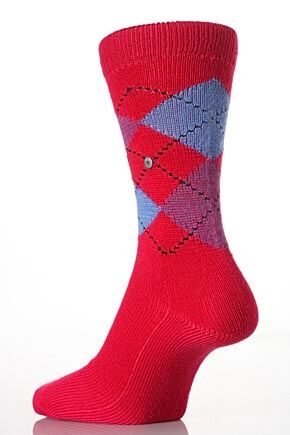
Personally, I'm not a great fan of whimsical socks. Nothing wrong with them - just not my thing. Having said that, the rule is there are no rules; but I always get leery with the word 'whimsical' since it is open to a myriad interpretations.... As long as you don't wear something outlandish and you stick with the diamond/argyle and other 'mainstream' designs and they match what you're wearing, I daresay you should be fine. Think of your socks like you would a tie: an accessory to bring your entire outfit together. Just don't wear a Bugs Bunny pair of socks or one with dollar bills on it....Please.
Brown shoes, brown socks?
The rule of thumb has been to match the color of your socks to the color of your shoes. I personally think it's better to match them to the color of your pants for unity of flow. The color of your shoes should generally be darker than the color of your pants/trousers but the color of your socks should never be darker than your shoes. The color of your socks needn't be identical to that of your shoes - a rough closeness works just fine for formal attire. For casual shoes, please wear white socks. Dark socks and casuals don't go together. Oh - and with sandals, no socks at all; not white, not light or dark - that's just plain wrong!
Brown shoes, blue slacks?
Once upon a time, blue slacks with brown shoes was frowned upon, but not so today. I think the Italians have made blue suits and brown shoes fashionable. Your brown shoes will work with lighter grays, browns, khakis and dark blue. They also work well with jeans. It's difficult to correctly match brown with black, anyway, so you can stay away from that. I happen to think that you could pull off blue with with brown shoes. Just remember to keep your shoes darker that your trousers. If in doubt, stick with black.
You'll find more information on socks here. I hope this helps. Have fun dressing up!
Sunday, January 30, 2011
Wednesday, January 26, 2011
The Albin Polasek Museum
Hidden in Winter Park, Florida is the gem of the Polasek Museum, which memorializes world renowned Czech- American sculptor and artist Albin Polasek. Over the course of his life, he created some 400 pieces of art, 200 of which are on display at the museum, which he started as a gallery in his retirement home in Winter Park. It is amazing to note that he sculpted many of his later works while he was paralyzed on one side with a stroke!


The garden is a perfect place to relax and reflect or even for an intimate picnic. It is set up for just that sort of think with benches and tables, hidden sitting areas, or you can just sit on the lawn by Lake Osceola and soak in some sun.


His sculptures of the human form are breathtaking in their attention to detail, making them very lifelike. Guests are welcomed by his sculpture called "The Sower", an imposing male nude. Throughout his life, he made various forms of his famous work "Man Carving His Own Destiny". It was a rather personal concept, where he was the rock brought in to the US from his home of Czechoslovakia, and he was carving out a life for himself here.
![]() |
| The Sower |
![]() |
| Man Carving Out His Destiny |
![]() |
| Man Carving Out His Destiny |
Polasek also created many religious pieces. Perhaps most imposing is his depiction of the Victorious Christ - a unique piece which shows the Christ looking up instead of down. His series of The Stations of the Cross is found in the tranquil garden which ends in Lake Osceola.
![]() |
| Victorious Christ |
![]() |
| Mother |
Special thanks to Todd Ruopp for this experience!
I highly recommend the Polasek Museum if you're in the Orlando area!
The Polasek Museum is at
633 Osceola Avenue
Winter Park, FL 32792
407.647.6294
www.polasek.org
The Polasek Museum is at
633 Osceola Avenue
Winter Park, FL 32792
407.647.6294
www.polasek.org
Friday, January 14, 2011
What do you want from me?
I was just listening to Adam Lambert's Whataya Want From Me and the question in the refrain kept ringing in my head: "Whataya want from me?" As a lifestyle blogger, it helps to know what my readers really, really want to read about.
So, since you've read this (obviously), and probably have read (or will read) some of the other posts, I'd like to hear from you. My scope is entertaining, cooking, traveling, fine dining, beauty and grooming, fashion, decorating, style, etiquette, spirituality...really, anything that has to do with life and style.
Please take a moment to leave a comment; let me know what you'd like me to write about, what you don't want me to write about, and how I'm doing. All your ideas, suggestions, and critiques are welcome, uncensored - I believe the harder the critique, the bigger the love.
And if you like what you read, share the love.
Have a great day, and remember - It's a good life!
So, since you've read this (obviously), and probably have read (or will read) some of the other posts, I'd like to hear from you. My scope is entertaining, cooking, traveling, fine dining, beauty and grooming, fashion, decorating, style, etiquette, spirituality...really, anything that has to do with life and style.
Please take a moment to leave a comment; let me know what you'd like me to write about, what you don't want me to write about, and how I'm doing. All your ideas, suggestions, and critiques are welcome, uncensored - I believe the harder the critique, the bigger the love.
And if you like what you read, share the love.
Have a great day, and remember - It's a good life!
Wednesday, January 12, 2011
Knots and Crosses
For men, the tie is often a safe item where we can add a touch of color to what could otherwise be a boring and predictable outfit. But for some men, the thought of knotting a tie can be rather intimidating. Hopefully, we can demystify The Secret of the Tie.
There are many ways to knot a tie. Actually, Thomas Fink and Yong Mao listed 85 in their book The 85 Ways to Tie a Tie (1999). Some of the more popular are the Full Windsor, the Half Windsor and the Four in Hand. Let's go through them one at a time.
The Full Windsor:
Named after Edward VII, the Duke of Windsor, it is a more formal style of knotting a tie and produces a symmetrical triangular knot. It is particularly suited to spread or cutaway collars. Here's how to tie it:
The Half Windsor:
Similar to the Full Windsor knot, it produces a smaller knot and not quite as symmetrical because it is brought up around the loop on only one side:
The Four-In-Hand
Also called the 'schoolboy knot', it is probably one of the most popular methods of knotting a tie because it it so simple. It produces a narrow, asymmetrical knot appropriate for general use:
Now some extra notes on wearing ties:
There are many ways to knot a tie. Actually, Thomas Fink and Yong Mao listed 85 in their book The 85 Ways to Tie a Tie (1999). Some of the more popular are the Full Windsor, the Half Windsor and the Four in Hand. Let's go through them one at a time.
The Full Windsor:
Named after Edward VII, the Duke of Windsor, it is a more formal style of knotting a tie and produces a symmetrical triangular knot. It is particularly suited to spread or cutaway collars. Here's how to tie it:
The Half Windsor:
Similar to the Full Windsor knot, it produces a smaller knot and not quite as symmetrical because it is brought up around the loop on only one side:
The Four-In-Hand
Also called the 'schoolboy knot', it is probably one of the most popular methods of knotting a tie because it it so simple. It produces a narrow, asymmetrical knot appropriate for general use:
Now some extra notes on wearing ties:
- Keep the dimple of the tie centered so the knot doesn't look uneven.
- Make sure the knot is tight enough. Too tight and you'll look like a sausage and too loose you could look unkempt.
- The tip of the tie should end in the middle of your belt buckle
- Don't wear a stained tie!
Sunday, December 19, 2010
Filet Mignon, my way
Today, for the first time since I became a full time student, I decided to cook some proper gourmet food that I would actually enjoy. I'm not a fan of cooking for myself, but with school being out for the winter, I wanted to celebrate - if even by myself. But I still didn't feel like putting too much work into that meal, so I made bacon-wrapped filet mignon with herb-tossed, roasted baby gourmet Klondike potatoes, steak tomatoes and feta cheese and pickled jalapenos. Sounds like a lot of work? Not really. Totally unconventional and totally me.
Just so you know, the filet mignon is referred to in France as the filet de boeuf, since the filet mignon refers to pork, not beef. It is the most tender and therefore, most expensive cut of beef. When buying a filet mignon cut, look for the lighter colored cuts rather than the dark ones. The lighter cut indicates more 'marbling', which will make it more tender.
I wrapped my filet mignon in bacon - it doesn't just taste great (anything with bacon does, unfortunately) - but it also keeps the meat moist. This is called 'barding'. I pan seared it on high heat for a few minutes each side to seal in the juices and sprinkled it with salt and pepper and popped it into the oven at 375 for 15 minutes to finish cooking through. Because it's such a tender cut, it's best to cook it just to medium-rare. The longer you cook it, the tougher it will get and it will also become dry. It's a good idea to use the touch method to test for done-ness instead of cutting it, as that will make the juices run out and make you lose both flavor and moisture. I use the SBF method. If when you press a finger into the meat it is:
While the meat and potatoes were in the oven, I sliced the steak tomatoes cross-wise, sprinkled with crumbled feta cheese and drizzled it with extra virgin olive oil. This is a different take on your traditional capri salad, so there was no mozzarella cheese or basil. So maybe not even a modified capri salad at all.
When everything came together, it smelled scrumptious and I couldn't wait to dig in - but not before I poured myself a glass of fine Cabernet Sauvignon! This would also have worked with some good Bordeaux, but I just happened to have a bottle of Cab.
With the fist mouthful, I was in epicurean heaven! All the layers of flavors were just delightful. The meat was tender and juicy, the tomatoes were so refreshingly different, and offered a great contrast to the feta cheese and the jalapenos. Yum! I can still taste the phantom flavors as I write this....It was well worth the effort.
So go ahead, try it and let me know how it turns out! Buon appetito!
Just so you know, the filet mignon is referred to in France as the filet de boeuf, since the filet mignon refers to pork, not beef. It is the most tender and therefore, most expensive cut of beef. When buying a filet mignon cut, look for the lighter colored cuts rather than the dark ones. The lighter cut indicates more 'marbling', which will make it more tender.
I wrapped my filet mignon in bacon - it doesn't just taste great (anything with bacon does, unfortunately) - but it also keeps the meat moist. This is called 'barding'. I pan seared it on high heat for a few minutes each side to seal in the juices and sprinkled it with salt and pepper and popped it into the oven at 375 for 15 minutes to finish cooking through. Because it's such a tender cut, it's best to cook it just to medium-rare. The longer you cook it, the tougher it will get and it will also become dry. It's a good idea to use the touch method to test for done-ness instead of cutting it, as that will make the juices run out and make you lose both flavor and moisture. I use the SBF method. If when you press a finger into the meat it is:
- Soft and doesn't bounce back: It is rare.
- Bouncy, but still soft: It is medium rare.
- Firm: It is overcooked.
While the meat and potatoes were in the oven, I sliced the steak tomatoes cross-wise, sprinkled with crumbled feta cheese and drizzled it with extra virgin olive oil. This is a different take on your traditional capri salad, so there was no mozzarella cheese or basil. So maybe not even a modified capri salad at all.
When everything came together, it smelled scrumptious and I couldn't wait to dig in - but not before I poured myself a glass of fine Cabernet Sauvignon! This would also have worked with some good Bordeaux, but I just happened to have a bottle of Cab.
With the fist mouthful, I was in epicurean heaven! All the layers of flavors were just delightful. The meat was tender and juicy, the tomatoes were so refreshingly different, and offered a great contrast to the feta cheese and the jalapenos. Yum! I can still taste the phantom flavors as I write this....It was well worth the effort.
So go ahead, try it and let me know how it turns out! Buon appetito!
Wednesday, December 15, 2010
Nailing it: The 5-step DIY nailcare guide for men
You'll need:
- A nail clipper
- A nail file
- A nail buffer (a rectangular foam block that looks like a cross between a sanding block and a kitchen sponge)
- A nail brush
- A cuticle pusher
- Cuticle oil
- Soak your nails in the soapy water for a few minutes to soften them up and scrub under your nails with the nail brush. You can also use the nail file that comes with the clipper to clean any residual dirt from under the nails.
- Clip your nails along the natural curvature of your fingers and follow that by evening out the cut, 'sanding' with the nail file. When clipping your nails, it is important not to crack them. (That's why soaking helps).
- Buff your nails using the buffer in the same fashion as you would buff a pair of dress shoes. If your buffer has sides with different textures, start with the most coarse and finish with the smoothest. Multiple-textured buffers give the most polish and can really make your nails look professionally manicured.
- Dab a drop of cuticle oil on each nail, wait for a couple of minutes and then use the cuticle pusher to push back the cuticle on each finger.
- Moisturize. Using good helping of the lotion, rub in the lotion into your hands from your wrists to your extremities.This is important because it helps keep the skin surrounding the nail grooves from drying and cracking and also keeps your hands soft.
Saturday, December 4, 2010
Bottoms up: A wine primer
The thought of being a wine connoisseur is enough to conjure up images of highfalutin, snobbish people mumbling fancy jargon. Having to choose a wine in a fine restaurant can make some nervous. It hasn’t helped that there are enough ‘rules’ and myths about wine that can make many people feel a little intimidated. But you can get to know wine pretty well.
First rule out the window: Don’t have red wine with fish or chicken or white wine with beef. True, it’s a good guideline, but by no means a hard and fast rule. Also, an expensive wine doesn’t mean a great tasting or a great quality wine. So where does one begin with wine?
Let's start at the beginning: opening a bottle of wine. Opening a bottle of wine is a simple art that anyone can learn very easily. Here's a video showing you how:
The senses are very important in appreciating any wine. What is its color like? If it is a white wine, is clear or hazy or opaque? What does it smell like? Does it smell like flowers, fruits, wood? What does it taste like? Can you pick up caramel, or citrus, or strawberry? How does it feel in your mouth? Is it smooth or bold or coarse? Don't worry of you if you don't can't pick up any of these initially - like anything else, it take practice to perfect.
When pouring wines, you don’t want to fill the glass – and especially for red wines, keep them below a third of the glass. Red wines need a lot more room to ‘breathe’, that’s why they are drunk in wide bowled glasses. It also makes it easier to swirl it without spilling the drink. Swirling wine helps to aerate it to bring out the flavors. You might notice that red wine drunk soon after it is poured may not taste as good as it does after it’s been swirled and left to sit for a few minutes.
Most basic white table wines would be considered 'dry' because they are fermented until all the sugars were converted to alcohol - making it dry. Examples of these would include the Chardonnay, Pinot Grigio and Sauvignon Blanc. Some wines, like those made from the Chenin Blanc grapes might be considered 'off dry' because they have some residual sweetness to them, but not enough to make them a dessert wine. The sweetness of a wine can also be affected by the ripeness of the grape and the presence of flavors verging on buttery or vanilla. California Chardonnays and wines from the Loire Valley, Alsace, Germany and Austria tend to be slightly sweeter.
Apart from dessert wines such as port, most red table wines are completely dry. Examples would be the Cabernet Sauvignon, Bordeaux, Merlot, Pinot Noir, and Syrah. Note that naturally occurring compounds in wines called tannins might have the effect of making you mouth feel dry, but that does not make a wine dry. Tannins are a function of texture, and dryness a function of taste (sweetness, or the lack thereof).
In fine restaurants, after you select your wine, the sommelier will bring you your wine and pour you a little bit. Swirl it around first, then sniff it deeply, taking note of the aromas. This is called the 'nose. Then taste it. Take a nice, healthy sip and move it around in your mouth for a few seconds before swallowing it. Remember that you taste different flavors in different areas of your tongue. If you like it, the sommelier will serve your party.
As the French say, "A votre santé!" Enjoy.
Subscribe to:
Posts (Atom)


